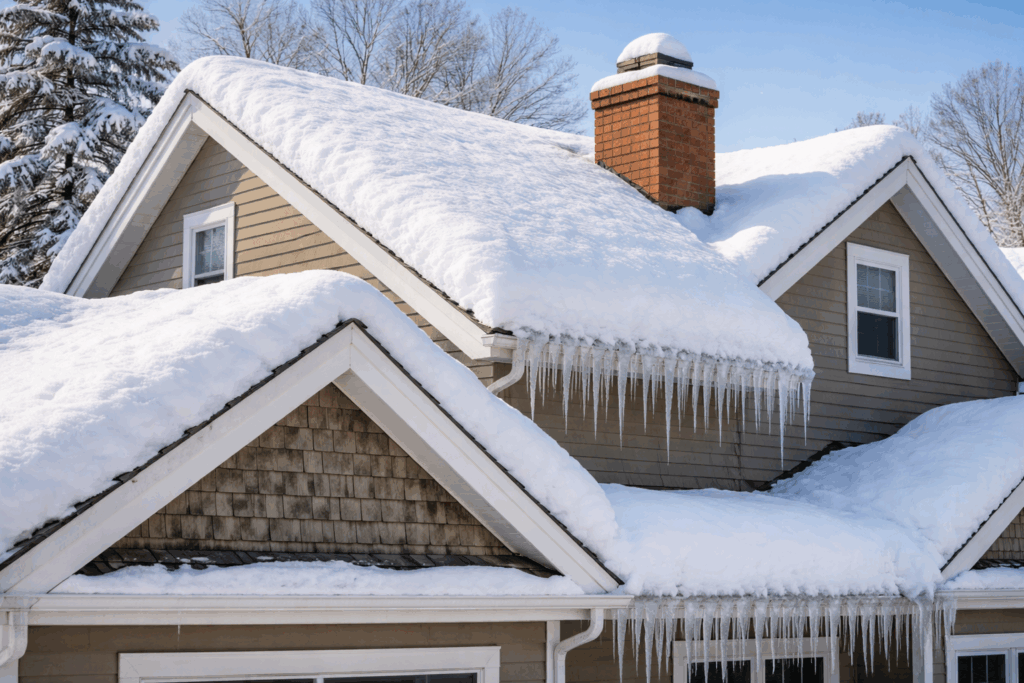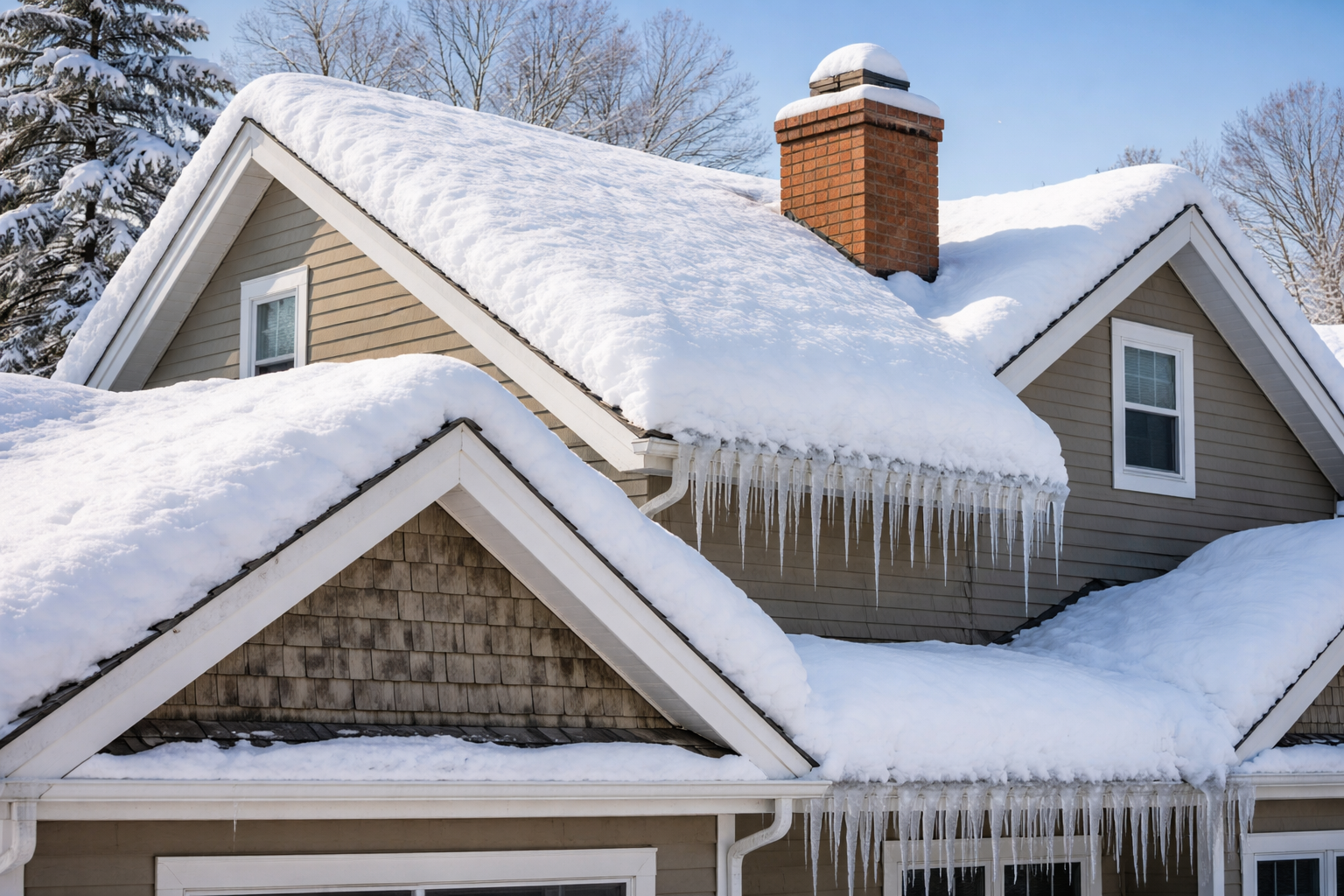
After a few good snowfalls, it’s common for Springfield homeowners to look up at their roof and wonder, “Is that too much?” Searches like “how much snow can a roof hold,” “snow load roof Illinois,” and “signs roof damage after snow” surge in mid-January for a reason.
While most roofs are built to handle winter weather, heavy snow combined with ice, drifting, and repeated freeze-thaw cycles can put serious stress on your home. Knowing what’s normal, what’s risky, and when to take action can help you avoid costly damage.
What Is Snow Load and Why Does It Matter?
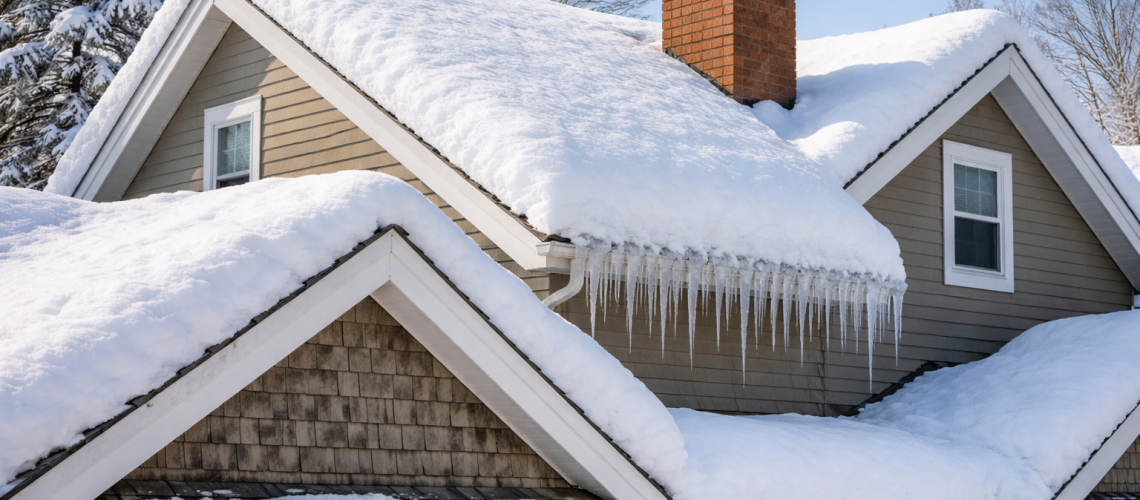
Snow load refers to the weight snow and ice place on your roof. Wet, heavy snow weighs significantly more than light, powdery snow. Add ice buildup and drifting, and that weight increases fast.
In central Illinois, roof structures are designed for typical winter conditions, but problems arise when:
- Snow accumulates over multiple storms
- Ice dams trap water and add weight
- Roofs are aging or already compromised
- Poor drainage prevents snowmelt from clearing properly
Signs Your Roof May Be Under Too Much Stress
Most roof damage doesn’t happen all at once. There are usually warning signs homeowners can spot from the ground or inside the home.
1. Sagging Rooflines
If any part of your roof looks uneven or bowed, it’s time to act.
2. New Ceiling Cracks or Popping Sounds
Unusual noises or cracks can indicate shifting caused by excess weight.
3. Sticking Doors or Windows
Structural stress can slightly shift framing, making doors and windows harder to open.
4. Leaks or Water Stains
Snowmelt can find weak spots, especially around flashing, vents, or older shingles.
Why Ice Makes Snow Load More Dangerous
Ice adds weight and prevents proper drainage. When melting snow refreezes, it can trap water on the roof, forcing it under shingles and into the home.
This combination of weight and moisture is one of the biggest contributors to mid-winter roof damage in Springfield.
How Your Home’s Exterior Plays a Role
Snow load issues are often made worse by other exterior problems, including:
- Aging or damaged roofing materials
- Poor attic ventilation
- Clogged or damaged gutters
- Failing flashing around chimneys and vents
- Older shingles that have lost flexibility
Addressing these issues reduces the chance of damage during heavy snow seasons.
Should You Remove Snow From Your Roof?
In some cases, yes…but it should be done carefully. Improper snow removal can damage shingles or create safety risks. For many homes, prevention is a better long-term strategy than emergency snow removal.
That includes:
- Ensuring proper attic ventilation
- Maintaining gutters and drainage
- Repairing roofing issues before winter worsens
- Replacing aging roofs before they become vulnerable
Why Mid-Winter Is the Right Time for a Roof Check
January is when weaknesses show up. Snow, ice, and cold temperatures reveal issues that aren’t always visible in warmer months. Addressing problems now can prevent:
- Structural damage
- Interior leaks
- Mold growth
- Emergency repairs during storms
- Insurance claims later
Let Capital City Help Protect Your Roof This Winter
At Capital City Home Improvement, we help Springfield homeowners evaluate roof conditions during winter and address issues before they turn into major repairs. From roof inspections and repairs to gutter improvements and ventilation solutions, we focus on protecting your home through every season.
If you’re concerned about snow buildup, leaks, or roof wear, now is the time to take a closer look.
📞 Call Capital City Home Improvement to schedule your free estimate: 217-414-2304
Capital City Home Improvement — The Best for Less.